
In 2023, two major histories of goth hit shelves. Both contain considerations mainly about music, but they also include literature, art, and political history, since goth as we know it today feeds from many inspirations, finally becoming a fully realized movement and aesthetic celebrating macabre sensibilities. One author co-founded a band that provided immense influence before being inducted into the Rock and Roll Hall of Fame. Whether its members resisted or accepted the goth label, they’ve certainly fired up many creative souls over the decades. The other played bass for a post-punk outfit before branching into music journalism, among other things, having penned now essential additions to any worthwhile music studies library. While covering the same topic, each adopts differing tones, voices, and emphases. Suggesting one over the other relies only on how much reading time individuals possess. I’d go with both, but you know how I roll.
Goth: A History by Lol Tolhurst
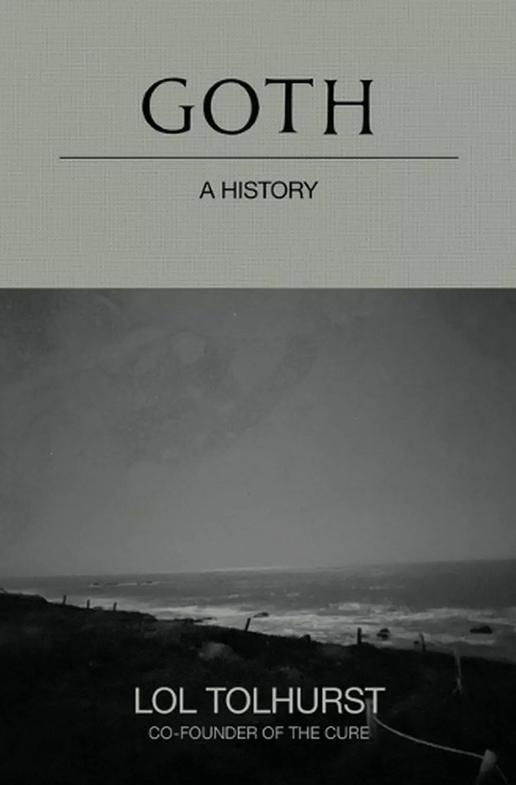
Goth: A History reads like hearing about the good old days while sitting on your elder goth uncle’s lap. Of course, Uncle Lol co-founded The Cure with Robert Smith and Michael Dempsey, which he records in his previous book, Cured: A Tale of Two Imaginary Boys. Now he examines goth history through his lens, beginning with the 1976 riot at the Notting Hill Carnival in London, where Rocco Macauley shot that infamous cover photo for The Clash’s first album. Punk was the seedbed for goth and its cousin, post-punk, but Tolhurst isn’t content with music alone. He delves into Gothic literature, citing expert Dr. Tracy Fahey quite heavily while discussing Walpole, Radcliffe, Shelley, Stoker, Poe, and Lovecraft. Even T. S. Eliot, Franz Kafka, Albert Camus, Jean Paul Sartre, Sylvia Plath, and Anne Sexton come into play. Like modern pop music, these all contain elements of the Gothic, but what finally sets goth music apart? “This brings me to my long-held belief about modern pop songs,” he starts. My rule of thumb, based on what I’ve observed over my long career, is that they are either about death or love. The difference with Goth music? They’re usually about death and love in the same song.” (28)
Goth for Tolhurst isn’t just fashion, rebellion, or a subculture. It’s a way to understand the world. It appreciates life’s macabre and somber notes and becomes more than weird young adults with pallid skin dressing in gray and black. Aspects of this sensibility always will be with us since they always have been. We’ve seen it in punk, post-punk, glam rock, psychedelic rock, and anywhere someone dares to express melancholy themes. John Stickney first applied goth to popular music when he described the venue of a Doors concert as the perfect location for their “gothic rock.” How we’ve progressed since then.
Tolhurst rambles poetically throughout, relating a beautiful journey all the more meaningful for his confessional tone much like that of Sylvia Plath or Anne Sexton. Particularly touching is his section about Depeche Mode, where he chronicles his 1988 departure from The Cure due to ongoing mental health issues that landed him at The Priory, a private London hospital he compares to Mervyn Peake’s Gormenghast. There he encountered Andy Fletcher who was grappling with anxiety and depression he’d developed while recording Violator with his bandmates. That Tolhurst wraps his analysis of Depeche Mode inside this extremely personal wrapper moves us beyond “just the facts,” engaging our hearts as well as our minds.
Go with Goth: A History if you don’t have extensive reading time. Tolhurst provides a meaty consideration under 300 pages. If you’re more interested in reminiscent accounts, Lol’s your boy. The next tome up for discussion, and I don’t use “tome” lightly, covers the same ground but with much more detail, and requires serious commitment from any reading it from the first page to the last.
The Art of Darkness: The History of Goth by John Robb
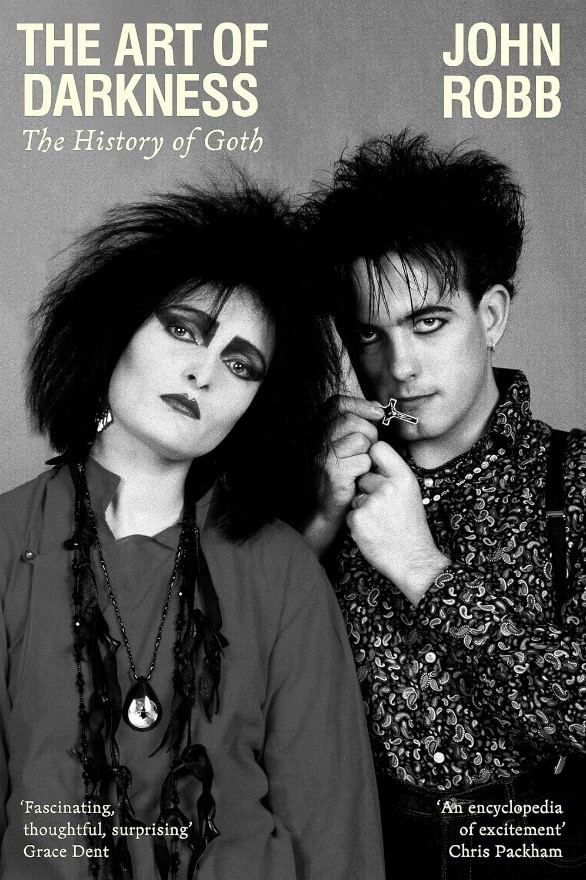
DJ, journalist, musician, TV presenter, model, and publisher, John Robb is no stranger to musical history. His Punk Rock: An Oral History has become a must for any fan’s library, and I look forward to reading his The North Will Rise Again: Manchester Music City 1976-1996. After consuming Tolhurst’s musings on Joy Division and what Robb shares about that period here spurs me to learn more. Given that The Art of Darkness runs 736 pages including notes and index, I know Robb won’t give me short shrift.
Robb opens Chapter 1 by painting an image of the 1980s goth scene before reverting to 410 AD in Chapter 2 with Alaric’s Goths sacking Rome. “Ever since then,” he says, “the term ‘gothic’ has been associated with that walk on the dark side.” (15) In fact, “Gothic” when applied to history, and architecture, has suffered negative connotations: “In the eyes of the critics, ‘Gothic’ was seen as the uncultured realm of a barbaric tribe and yet the styles of the later Gothic revival also became an inspiration to a whole host of architects and artists much despised by sophisticates that would slowly spread across Europe.” (16)
Nonetheless, creative types move toward depicting alienation, doomed love, and sorrow because how could they not? Critics be damned! If all were June weddings and Marcia Brady dating Doug Simpson, how boring would that be? And even more, how unrealistic! Like Tolhurst, Robb realizes the Gothic always has been and always will be however it manifests. And manifest it will.
Robb reaches Siouxsie and the Banshees on page 163, then The Cure on page 282, and Bauhaus on page 322. His pace seems Ice Age glacial unless readers contemplate how much information he’s sharing. Authoritative, sometimes overly enjoying the weeds, Robb’s always reverent toward goth, its cousins, and its antecedents. He organizes his chapters so that curious seekers can choose sections of interest much like perusing an encyclopedia or reference text. He does have an endpoint, though, encapsulated in his final chapter, “Apocalypse Now! Goth’s End Days.” The twenty-first century, he feels, has become the “most dystopian of times, even the darkest imaginations of centuries of gothic writers and musicians could never have concocted a story to mimic the world’s current gloomy malaise.” (623) Additionally, what was once niche is now mainstream with goth, or what could be termed goth, everywhere. I’m reminded of how Apple co-opted John Lennon and Mahatma Gandhi for advertising purposes, or how Ben and Jerry’s now has a franchise at the corner of Haight and Ashbury in San Francisco. Superficiality seems the endpoint of all earnestness, right? Not necessarily. Robb concludes:
The art of darkness is all around us, reacting to the dystopian as it always has. Culture blur continues – where it was once easy to stand out in the crowd, provocative clothing has become normalized, and those without tattooed skin are the exception . . .
Yet the mainstream’s meddling and cynical appropriation of the surface of a highly attractive form, the post-punk’s alternative dark matter and energy are everywhere.
Thankfully, the new dark ages still require a fitting soundtrack and the art of darkness is the only modern art that truly defines these dystopian times. (640 -1)
Let your melancholy selves roar, my friends. Honest expression may be the only thing that will save us. Tolhurst and Robb, and everyone they scrutinize, teach us how.
 I WILL FIND THE RIGHT WORDS