

In an article entitled “The Beats and Visual Culture,” David Sterrit groups Beat-related films into three categories: mass-audience movies and television shows, experimental works, and nonfiction works. The Beat Generation (1959) falls into the first category, including films that “explore Beat interests or represent Beat personalities,” but “show little understanding of Beat ideas, sympathy for Beat positions, or respect for Beat lifestyles.” Produced by Albert Zugsmith and directed by Charles F. Haas with a screenplay by Richard Matheson and Lewis Meltzer, The Beat Generation is a thriller about police detective Dave Culloran, portrayed by Steve Cochran, hunting a Beatnik serial rapist while dealing with his own misogyny. Stan Hess, the rapist played by Ray Danton, earns the nickname “The Aspirin Kid” from his habit of leaving aspirin tins behind at the scenes of his crimes. The film fails on multiple levels.
First, misogynistic elements move quickly past cringeworthy to flinch-inducing. Rape scenes always disturb in all the wrong ways, and the filmmakers may have wanted Culloran to experience growth through letting go of the wrongs his first wife had done him, the ones he projects onto all women, but the resolution misses the mark. I began wondering what Richard Matheson, who gave us classics such as I Am Legend and The Incredible Shrinking Man, had been imbibing. Every author pens something they’d rather not list for award consideration, potboilers that forestall starvation or flat-out misfire. Gustave Flaubert, who wrote the wonderful Madame Bovary, inflicted upon the world Salammbô, for example. I hope Matheson wished The Beat Generation would disappear into obscurity, but I’m writing about it in 2025, so . . . sorry, Richard.
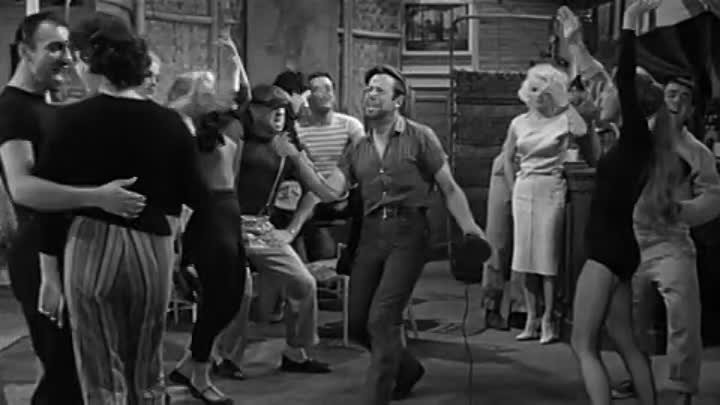
The Beat Generation also fails as a representation of Beat culture, and, to be fair, the intended representation is exploitative, not factual. Regardless, it fails. Beats or “Beatniks” were “weird” and “way-out” as described on the movie poster. Culloran plunges into a counterculture far removed from the predominantly conservative lifestyle of the 1950s, a titillating sub-world populated with bohemians and outlaws. The creative team possibly had hoped to accentuate noirish, thriller-related themes with popular, mass-media images of the Beats. If they’d read Go and On the Road more closely, their characters may have approximated Paul Hobbes and Sal Paradise, authentic Beats. Instead, viewers get Maynard G. Krebs and friends, hanging out in coffee shops, banging bongos, and reading what today would be called slam poetry, albeit not good slam poetry. Louis Armstrong provides the only saving grace with his musical interludes.
Finally, what a cast, said sarcastically, with among others Mamie Van Doren, Jackie Coogan, Norman Grabowski, and Vampira. Mamie Van Doren made significant bread and butter from multiple exploitation efforts. Jackie Coogan, once famous for playing little John in Charlie Chaplin’s The Kid, would later gain eternal love by playing Uncle Fester in ABC’s The Addams Family. I remember Norman Grabowski from several Disney live-action movies, such as The Misadventures of Merlin Jones (1964) and The Monkey’s Uncle (1965). I’d wager that those seeking out The Beat Generation do so for Vampira, who makes a cameo as a Beat poet, not her famous horror-host persona. She’s credited as Vampira, however, because who’d ever heard of Maila Nurmi? This combination never unifies into a cohesive unit, leaving only mismatched pieces, some from previous Zugsmith efforts. Availability and convenience count for something, maybe? Maybe not.

New York Times critic Howard Thompson summarizes this cinematic nightmare with a review issued shortly after The Beat Generation’s release. I happily give him the last words:
“THE BEAT GENERATION” is enough to make any member or non-member walk outside the theatre and butt his head against the wall. This excruciating and tasteless little entertainment package arrived at neighborhood showcases yesterday, courtesy of Metro-Goldwyn-Mayer—if courtesy is the right word..
This corny melodrama ranges from some laboriously “frank” discussions of unwanted pregnancy to even more contrived close-ups of the “beatniks” in their den. These greasy-looking characters are seen sitting around, writhing to “noise” records or noisier music and raptly listening to what passes for poetry. Fay Spain, the shapely Mamie Van Doren, and Jim Mitchum are among the others involved in this incredible movie, whose climax involves one battle in that beatnik den and another one underwater. It’s hard to tell the difference.
 I WILL FIND THE RIGHT WORDS