

During the 1970s, most boys around Campbell, California, bonded with their fathers through sports, automobiles, fishing, and hunting rather than horror magazines, comic books, or Saturday-afternoon science-fiction film shows. I truly wanted to bond with my father, but he was into football and baseball, and for me, sports, even still today, are yuck. My only way in, it seemed, was through the stack of paperbacks adorning his nightstand, ones with cardboard cigarette ads inserted, that never ran more than 200 pages and featured covers with tough guys, high-powered firearms, and, oh, those women. Most prominent was Don Pendleton’s Executioner, the inspirational source of inspiration for many authors breaking into men’s fiction, and also for Marvel Comics’ The Punisher. Pendleton wrote thirty-seven of the first thirty-eight in the series, sending his hero, Mack Bolan, from city to city, where he served a living hell for the American Mafia. The man was a perpetual vengeance machine, highly trained, obsessed really. If you’ve ever read any, you know what I mean. Men’s series were booming at this time, and new titles popped up monthly, and they were my hook into Dear Old Dad, who was quite pleased when I’d discuss, say, Executioner #3: Battle Mask rather than begging him to see Close Encounters of the Third Kind with me. Trash Fiction Champion provides an expansive list that shows the market’s breadth. In 2022, however, the titles included scream toxic masculinity: https://trashmenace.blogspot.com/p/mens-adventure.html.
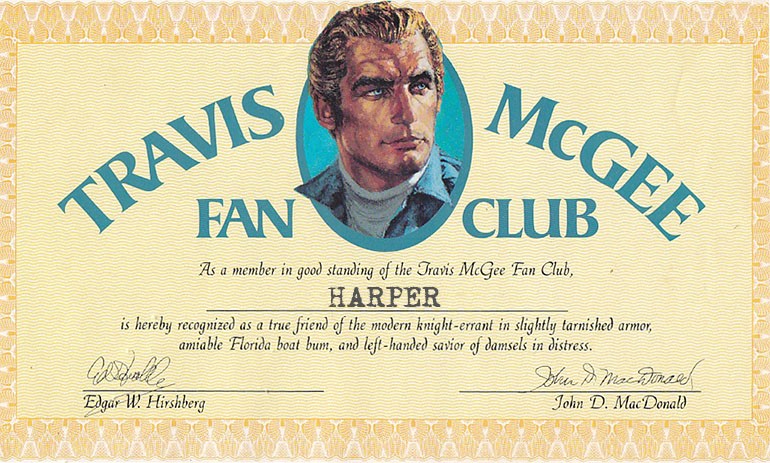
But among the testosterone thrillers and westerns, there were offerings with a bit more intellectual depth, but that still resided within action and hard-boiled mystery: Ed McBain’s 87th Precinct, Dick Francis’s Racetrack Novels, and Ross MacDonald’s Lew Archer, for example. Paramount was John MacDonald’s Travis McGee, a series that, for the most part, hasn’t fallen too mightily beneath the Suck Fairy’s corrective touch over the decades. Mind you, MacDonald wrote for a masculine audience, “masculine” defined in the classic sense, including images akin to the Marlboro Man ideal: strong, emotionally detached, a loner who needs no one and nothing other than his wits and his will. Travis McGee, as a character, fits into this mold, albeit idiosyncratically, not a loner, with hints of Philip Marlowe or Sam Spade, even if officially he isn’t a licensed private investigator. And unlike Mack Bolan and Matt Helm, Travis McGee reflects – lots. Humanity, cities, relationships, life in general, all is fair game to this adventuresome philosopher, which, when I was eleven, went over my head, but Dad liked him, so I tried.
At fifty-seven, I’ve survived acute myelogenous leukemia, spent two years teaching at the university level for Peace Corps Ukraine, earned degrees in Psychology/Anthropology and English Literature, and worked steadily within the crisis-intervention/suicide-prevention field. Safe to say, I’ve progressed emotionally and intellectually beyond most men’s literature, but I wondered about MacDonald and Travis McGee, since even back then I could detect “something more.” Recently, then, I read the first five out of twenty-one Travis McGee books to find out what I’d see now that I couldn’t see then, if anything at all.
McGee lives beyond societal bonds. He holds no steady employment and lives aboard the Busted Flush, a custom-made fifty-two-foot houseboat that he won playing poker. His automobile is Miss Agnes, a Rolls-Royce pickup truck. To get by, he picks up odd salvage jobs, recovering money, jewels, and stolen valuables for fifty percent of the value. Once cash-heavy, he continues the retirement he takes between engagements rather than taking it all during senior citizenship like most of us do. You need something found or recovered? Then visit Travis McGee at Slip F-18, Bahia Mar Marina, Fort Lauderdale, Florida. You can’t miss his houseboat. It’s moored near the one occupied by the Alabama Tiger and his never-ending, floating party.

Don’t let that mid-1960s go-go imagery fool you, however. Author Kelley Eskridge describes what attracts her to this series:
MacDonald does that kind of thing all the time — Travis takes a moment to ruminate on some aspect of life, the universe and everything, and then just goes on about his day. He’s a smart, complex man engaged with his world and yet very separate from it. A thoughtful man, a man of sex and violence, a man who sits still for sunsets and notices the small beauties of the world. A man who wanders through his own interior swamps and doesn’t always like what he finds but owns it anyway.
Yes, Eskridge also notes the moments of casual racism, sexism, and homophobia – unfortunate features of the era with which our culture continues to struggle. Even if she dislikes these elements, however, they don’t spoil the books for her. “These days,” she says, “I need emotional truth and growth and the feeling of recognition in both the joys and sorrows.”
One disturbing instance of homophobia occurs in the fourth novel, The Quick Red Fox. While tracking down sexually explicit photos for a famous actress suffering extortion, McGee encounters a woman character living with her “bull” and describes bulls as preying on vulnerable women, indoctrinating them into the lifestyle. Yowza. Especially now, when far-right groups are fear-mongering with bullshit about LGBTQ+ communities “recruiting” and “grooming” children for the lifestyle, such passages read extremely rough. Not a proud moment for John D. MacDonald, most assuredly.
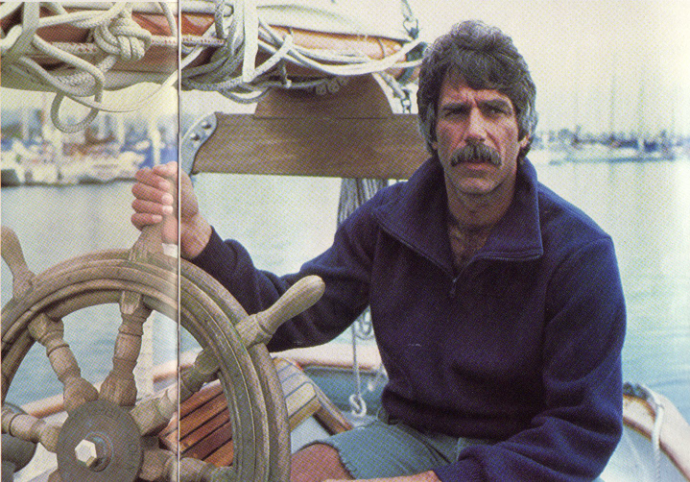
Still, I enjoyed all five novels and will continue reading the series. I’ll even scare up Darker than Amber (1970) starring Rod Taylor, and Travis McGee (1983), a made-for-television film with Sam Elliott playing our favorite laconic beach bum. Elliott, I think, without having seen the film, I can say this casting is genius. MacDonald also wrote Cape Fear, presenting to the world Max Cady, the villain so frighteningly portrayed first by Robert Mitchum and then by Robert DeNiro.
Decades later, Dad and I still bond over genre media, but now we’re more into Columbo and Doc Martin than Remo Williams or James Bond. Last year, we watched the entire runs of The Mary Tyler Moore Show, The Golden Girls, and Hot in Cleveland. Good Lord, man! You’d let someone catch you watching that? What happened to your masculine pride? Bah. I defy any alpha-hero to have faced Betty White toe-to-toe and come away with their testes intact. The wiser Travis McGee would have weighed his options before going there, and so I remain a fan.
 I WILL FIND THE RIGHT WORDS